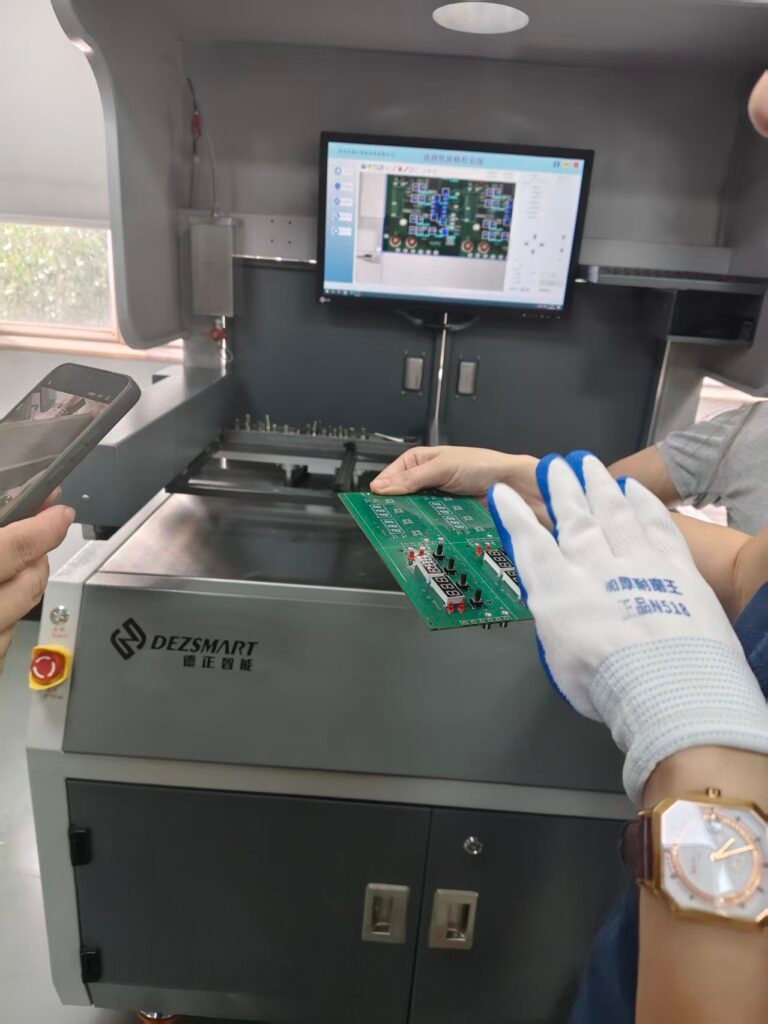
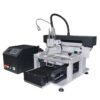
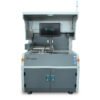
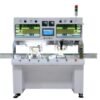
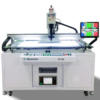
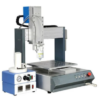


Our customer recently sent their PCB samples to us for selective wave soldering trials. We tested the soldering process according to their PCB structure and component requirements to help verify the soldering quality and process parameters before production.
How Does Selective Wave Soldering Work?
Unlike traditional wave soldering, selective wave soldering applies molten solder only to the specific areas that need soldering.
The typical process is:
Fluxing → Preheating → Selective Soldering → Cooling
A programmable solder nozzle moves precisely according to the preset soldering path, allowing solder to be applied accurately to through-hole components and designated solder joints.
Why Choose Selective Wave Soldering?
✅ Precise soldering – Solder only where needed, minimizing unnecessary soldering.
✅ Lower thermal impact – Localized soldering helps reduce heat exposure to sensitive components and surrounding areas.
✅ Less solder consumption – Precise solder application can reduce solder waste compared with full-board wave soldering.
✅ Flexible production – Suitable for complex PCB layouts, mixed SMT + through-hole assemblies, and small-batch production.
✅ No wave pallet required in many applications – Reduces the need for additional masking and fixture preparation.
✅ Programmable process – Soldering paths, parameters and process conditions can be controlled according to different PCB designs.
✅ Improved process consistency – Automated soldering provides repeatable soldering results and reduces dependence on manual operation.
📩 Have PCBs that need selective wave soldering?
You can send your PCB samples to us for trial soldering and process evaluation. We can test the soldering process based on your PCB design and requirements.
Send us your PCB samples and let’s find the right soldering solution for your production!
#SelectiveWaveSoldering #WaveSoldering #PCBAssembly #PCBA #ThroughHoleSoldering #SMT #ElectronicsManufacturing #PCBManufacturing #SolderingMachine #SelectiveSoldering